We go global! AEM Global Developer Collective Meetup in Munich to recap the adaptTo() Conference & Talk Chat-Based UI in AEM
Following the adaptTo() 2026 conference in Berlin, AEM Champions Tad Reeves and Roman Mueller made their way to Munich to meet up with fellow AEM Champion Anian Weber and many other AEM developers & architects in the Munich area to continue the conversation.
AEM GDC Munich Meetup Video
The meetup, graciously hosted by our friends at Netcentric (thank you Georg!), was in Munich Central Tower - a location with a lovely, panoramic view of Munich (including an absolutely PACKED Oktoberfest just a short walk from the location).
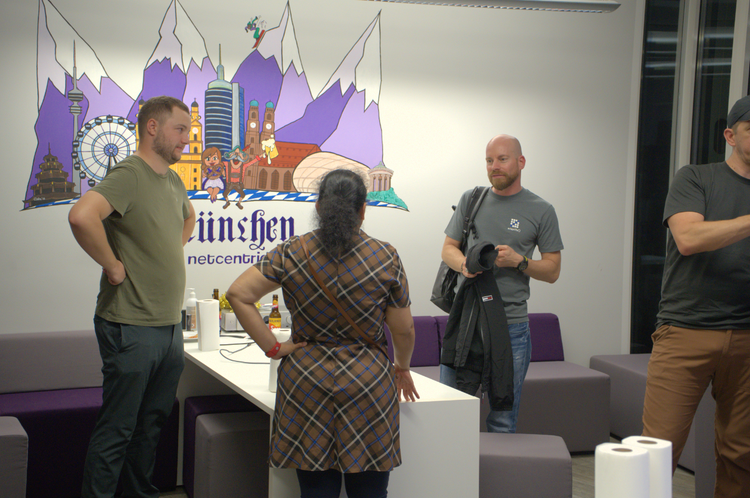
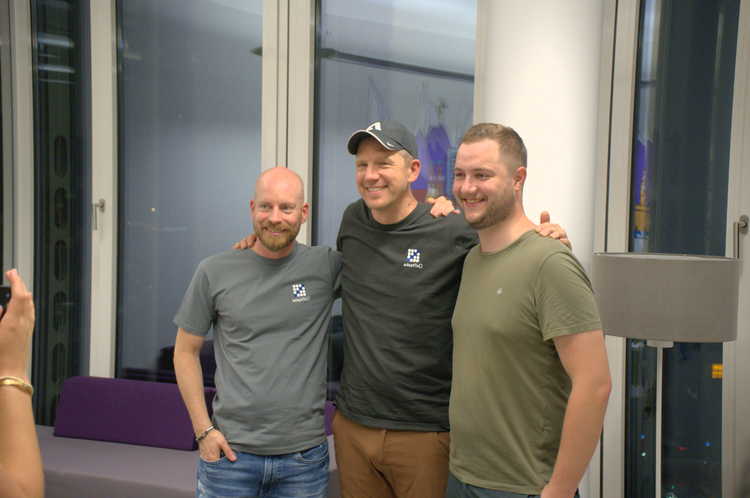

At this meetup, we discussed our top talks and themes from the adaptTo() Conference (the longest-running AEM Developer conference, having just celebrated its 15th year this year!), and then moved to a sort of "live architecture" session where we talk about the best way to structure agentic chat interfaces for a content management system!
"Live Architecture" session: What should a Chat-Based CMS Look Like?
At adaptTo(), Natalia Venditto & Sharanya Vinod gave a great talk on Spellforge to Experience Workspace on the way to approach conversational authoring with Adobe's CX Enterprise Coworker. But a chat box isn't the only part of the UI to think with. What elements would an ideal CMS UI have, where you could make possibly-sweeping conversational changes to critical production content?
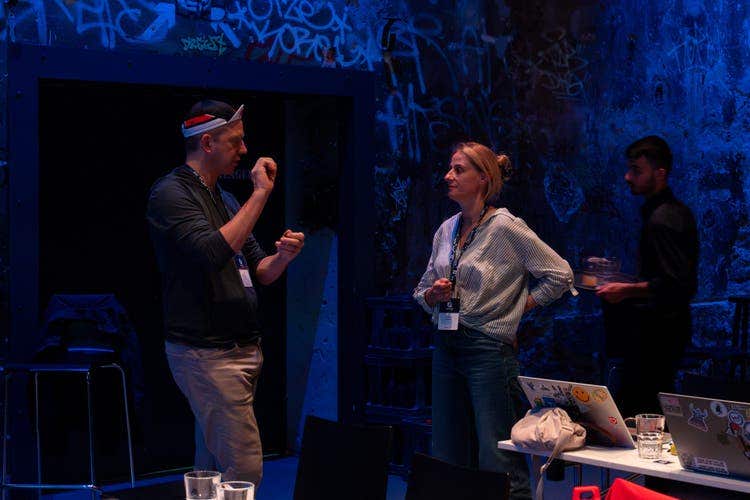
As an ad-hoc technical dream team (and wow would I love to do a project just comprised of the all-star team in that room!!!) we kicked around exactly that: live-architecting what a chat-driven Experience Workspace would actually need to be usable without turning the content tree into cat food.
The current EW demo chat harness is just a box in the lower-left corner that can talk to the DA MCP (and friends), and it’s already enough to make people (well, at least my customers) nervous. I.e., it can modify documents, add blocks, publish, touch indexes, or delete things based on a prompt, and the blast radius is "the entire set of permissions the MCP has" rather than what a sensible author would ever click.
So what SHOULD the UI have? What are the problems, and how might possibly they be solved?
Things we live-discussed and questions still floating around (ones I really hope CERTAIN FRIENDS AT ADOBE have a look at):
- How do you actually surface the blast radius of a conversational change so an author can see (and reject) it before anything is published? Is a simple page preview enough, or do you need a full visual/structural diff plus a list of every side effect (index updates, metadata, related pages, assets)?
- Can you trust the preview? Several of us pointed out that an agent can forget to mention (or show) some of the changes it made. How do you guarantee the preview matches what will actually ship?
- Edge Delivery already has snapshots/reviews. (Thank you Chris Millar) Should every agentic edit land in a temporary snapshot (the content equivalent of a git worktree) that requires an explicit “merge” or approval step? THAT might be cool (Natalia!!??)
- Who stays responsible? Everyone agreed the human whose name is on the publish action remains accountable, but how do you make that feel real in the UI so people don’t just click through?
- Multi-agent validation gates: one agent for brand voice/language, another for theming/compliance, another for performance/accessibility, plus a human at the end. How much of that is automatic vs. configurable per site or per role?
- The concurrent authors problem: five people prompting “find every document that says X and change it” against the same folder. How do you detect and resolve collisions before they become production incidents?
- Role and skill scoping: the person whose only job is updating webinar dates shouldn’t be able to rewrite the corporate homepage via chat. How do you encode that in the UI and in the available skills?
- Custom skills as the real differentiator: authors (or their teams) will want to import or author their own campaign/workflow skills. How do you make that safe and reviewable without turning skills into another ungoverned prompt library?
- Translations: people will absolutely stick in chat “Yo clanker, give me this same page in Polish” and skip the translation vendor/workflow. Does the UI need explicit hooks for translation memory, glossaries, and review, or do you just accept that some of this will bypass traditional processes?
- Regulated industries (insurance, finance, etc.) that must retain every version of a page for years. How do conversational edits fit into existing snapshot/audit requirements without making the happy path unusable?
- Evaluation of the output itself: we spent a lot of time on process and very little on how you systematically judge whether the generated content is actually any good (tone, accuracy, completeness). Is that a skill, a separate review agent, or still mostly human judgment?
- The demo chat still forgets multi-step tasks and needs constant reminders. How much of the “ideal UI” is really just better orchestration and state management underneath the box versus new visual chrome?
Some of these feel reasonably thought-through already; others are still open questions we were throwing around with pizza. The through-line is that a bare chat box is not the product, the product is the combination of chat + constrained skills + visible, reviewable, human-gated change.
Key Moments in our Munich AEM Global Developer Collective Meetup
- 0:00 Introduction
- 4:00 Recap of adaptTo() 2026 from Roman Mueller
- 15:18 Discussing the top AEM & Adobe innovations from adaptTo() 2026
- 38:45 Live Architecting the Experience Workspace Chat UI
About the Authors
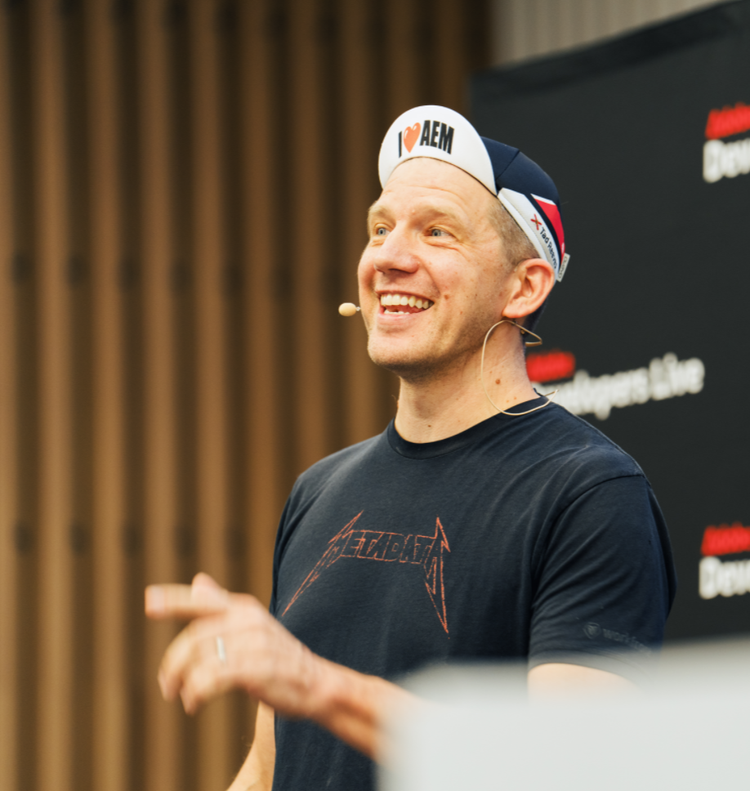
Tad Reeves
Principal Architect at Arbory Digital
Tad is a 3x AEM Champion and leads Arbory Digital's AEM practice. Tad started working with CQ5 in 2010 with Day CQ 5.2 and has been in the CQ/AEM space ever since. He has extensive experience in website infrastructure dating back to 1996, and has worn nearly every hat in website delivery from solution architecture to product management.
When Tad isn't working (and sometimes when he IS working), he enjoys mountain biking and exploring nature with his wife & 3 kids.
Hank Thobe
CMO at Arbory Digital
Hank is the Chief Marketing Officer and a Project Manager at Arbory Digital. He helps organizations drive digital transformation through strategic marketing, Adobe Experience Manager (AEM), Edge Delivery Services (EDS), AI adoption, and enterprise technology initiatives.
Like what you heard? Have questions about what’s right for you? We’d love to talk! Contact Us