
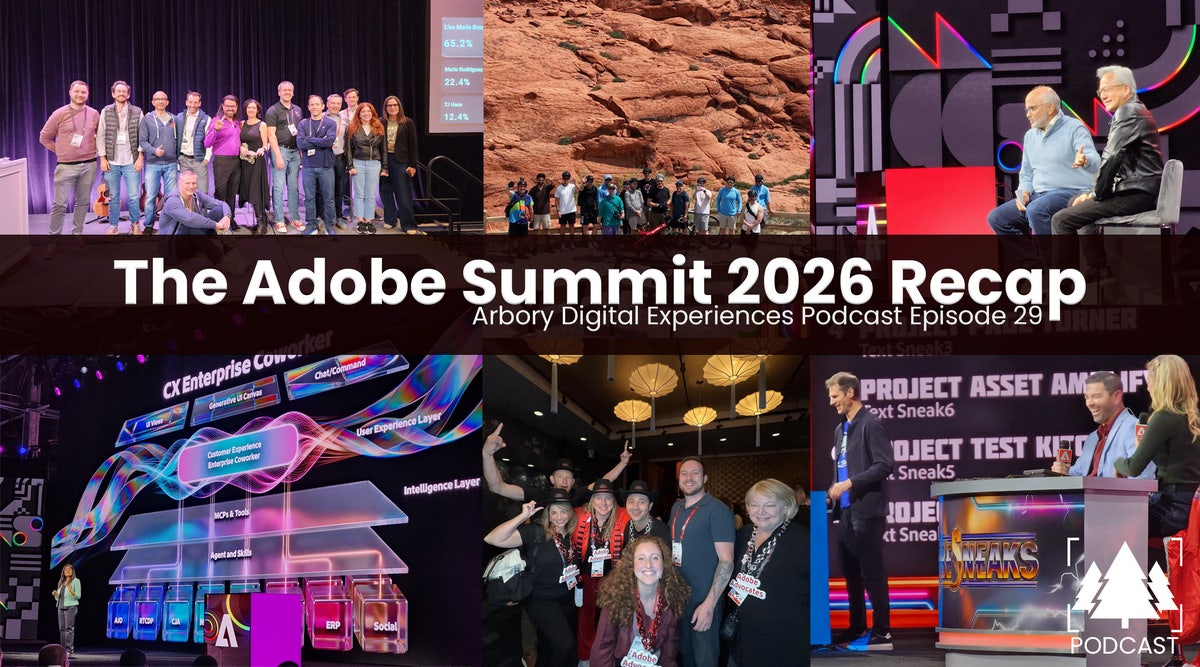
The Adobe Summit 2026 Recap: Major Releases & Take-aways
April 26, 2026
The Adobe Summit 2026 Recap: There's a LOT you need to be tracking with!
TLDR: Adobe demonstrated a massively-sharpened focus on taking what are already the most comprehensive and capable digital marketing tools for top brands, and unlocking their use in today's LLM and AI-agent-powered world. In countless contexts, from web migrations to marketing campaign creation and rollout, authoring enablement and backend data orchestration, what formerly took weeks and months can be done (no exaggeration) one or two orders of magnitude faster, presuming an educated hand is on the wheel. In their words, Adobe's goal is now to be the "most-complete, open and trusted platform that AI can build on."
It's a lot to take in, but we'll do our best to summarize!
Also available on Apple Podcasts and as an audio or video podcast on Spotify.
Adobe Summit Highlights & Announcements
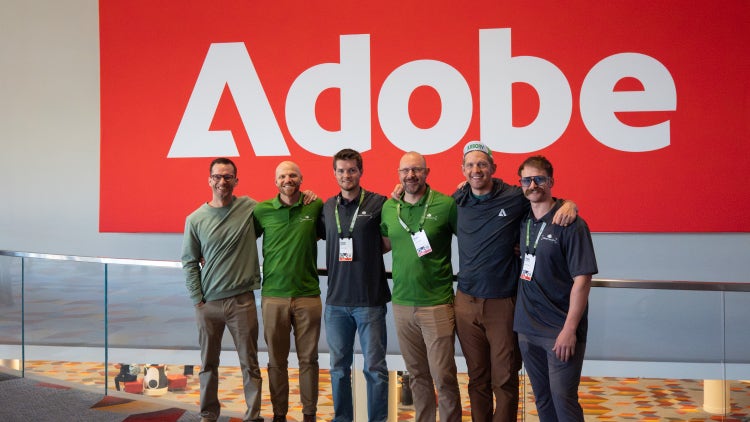
The Second Annual Arbory Digital Pre-Summit Bike Ride!
Before Adobe Summit got underway, and we all went underground to breathe recycled air for 3-4 days straight, we once again took a group out for fresh air and camaraderie in the beautiful natural areas outside Las Vegas. This year, we took a group of around 15 AEM professionals out to the Calico Basin in Red Rock Canyon for an 18+ mile loop around the stunning rock features.
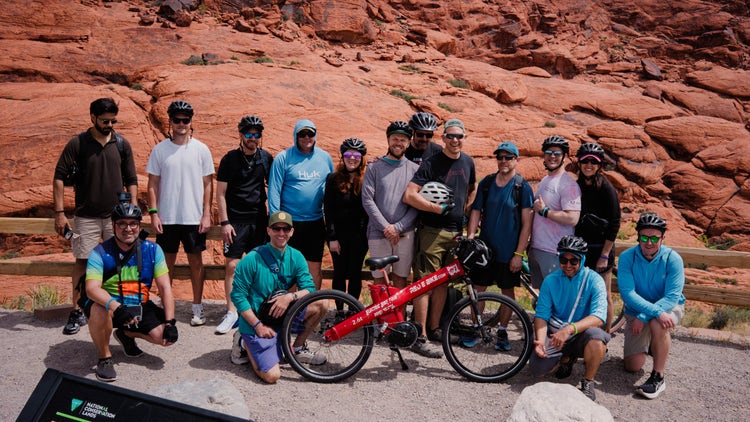
Everyone (aside from one notable individual) had an e-bike, which meant everyone was free to look at the scenery and make great conversation without having to breathe too hard. (again…with one exception)

It was a wonderful way to start Adobe Summit, and we look forward to continuing the tradition!
[video of the ride coming shortly!]
You Absolutely Need to Understand Agents and MCPs
Be honest for just a sec: could you stand in front of a group and define succinctly what “agentic” means? How about an MCP? If you’ve got any question at all, please take a sec to define some of these terms, as they will be brought up again and again – and you need to understand what they are and what they mean to understand what this year’s Summit was all about.
Defining “Agentic” and an “Agent” in the context of an AI-enabled system: Many people get confused about this, assuming that an “agent” is referring to a chatbot, so it’s important to understand. Referring to something as “agentic” means it’s a system designed to act with some autonomy to accomplish a task, and is focused on the outcome, rather than just executing a command or answering a question. Agentic systems take a question, call for action or specification, and can autonomously execute multiple different sub-tasks (or even call other agents!) in service of getting that task done. Coding agents are a well-understood example of this, where one can tell an agentic coding assistant “write me a function that does xyz and test it,” which could spawn multiple tasks and activities in service of the completion of that task.
Defining “MCP” or Model Context Protocol: MCP is a standard developed in 2024 for AI applications (like Adobe’s agents, ChatGPT, Claude, Copilot, or other systems) to be able to communicate with external data sources, tools and systems. Think of it like a “USB port for AI”, as it allows a generic AI tool to understand and work with very specific systems (like your content management system, commerce systems, workflow management, etc). MCP allows for authentication, for exposing specific commands (like “open document” or “publish blog post” or “start this workflow” from an endpoint that you can authenticate to and communicate with securely.
We’re going to be talking about BOTH of these repeatedly, and a lot of these concepts are barely a year old so you’re forgiven if you aren’t familiar!
Agents Don't Create, People Do
Adobe as a whole very-much made sure to double-down on the concept that humans are still at the center of every product, and that every technological advancement is there entirely to empower creators to do their thing.
Anjul Bhambari probably summarized this best on Day 2 of the keynotes specifying & clarifying Adobe’s mission statement in this field:
Adobe’s role is to provide the most-complete, open and trusted platform that AI can build on.
This was then reinforced with multiple references to a “composable AI fabric” that could be used by any AI system or 3rd-party datasource on the way in or on the way out. This means, too, that Adobe will not be trying to corral folks onto their user interfaces and platforms, but instead to make their (in my opinion) still-industry-leading platforms available to any system that will compose the input and output.
Adobe’s Agents as an Authoring Accelerant
There were multiple sessions that focused on a number of different ways that Adobe’s agents & AI-enabled capabilities can accelerate multiple facets of the authoring process. They did showcase these on both trad AEM as well as AEM Edge Delivery Services, but I have to say – nearly all of the genuinely fast capabilities really require that you get yourself onto Edge Delivery.
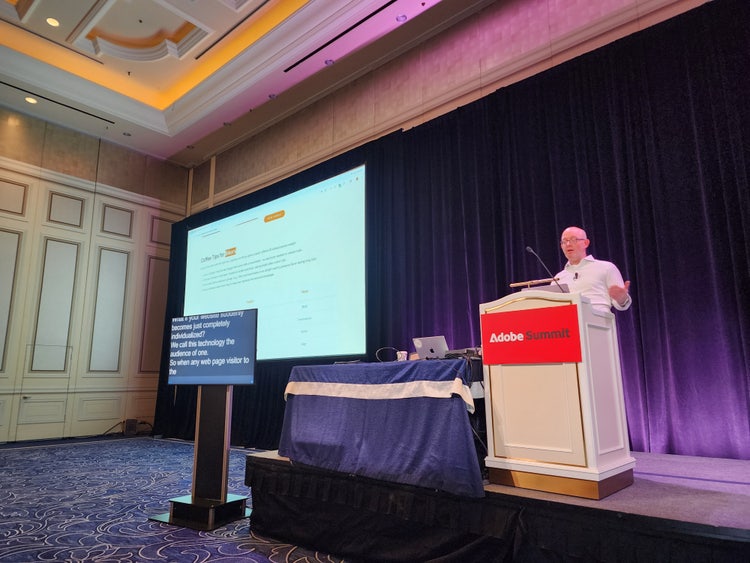
Cedric Heusler and Haresh Kumar gave a masterclass in this, detailing a multiple examples of these agents & capabilities in action. Cedric showed the Experience Production Agent in action, doing things like taking a hand-scrawled annotation on a PDF and turning into a plan for content changes.
They showed the Governance Agent in action, adding things like competitor positioning, text checks, brand voice, content guidelines and more into content.
Cedric also showed the new Experience Workspace, which will be a new editing surface on top of the Author Bus used by Document Authoring, allowing for rich, robust in-context editing and an agentic, conversational user interface right in the author environment.
But Chris Millar & Markus Haack’s lab should have convinced positively anyone that a brand-new era of author customizability is at hand.
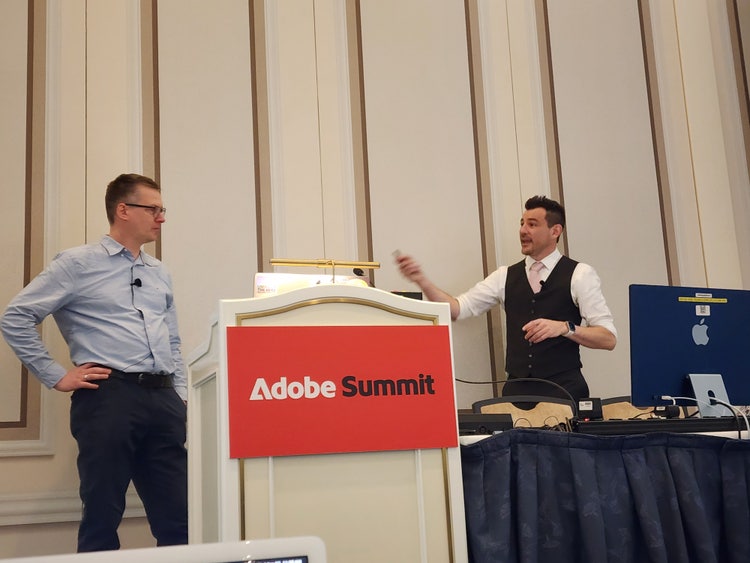
What makes Migrating to AEM Edge Delivery over 10X faster? Call her “Emma”
A tool that was first mentioned last year at Summit Sneaks as “Project SiteLeap” and then launched with a variety of names, was finally soft-launched in November as the Experience Modernization Agent on the domain “aemcoder.io”. We started calling it “aemcoder” only to find that Adobe folks affectionately refer to her as “Ema”.
Regardless of the name, EMA is a truly-powerful set of tools in a simple UI, that allows for an EXTREMELY rapid process to move from any existing CMS over to Edge Delivery Services.
The same tooling that makes Ema so powerful also stems from and enables a set of AI skills and MCPs that allow one to work with Ema or the coding agent environment of your choice to rapidly get sites into Edge Delivery Services.
New Products Under the New CX Enterprise Banner
In case you’re confused the next time you go to experience.adobe.com to log into your Adobe solutions, “CX Enterprise” was just launched as the over-arching banner of Adobe Experience Cloud products.
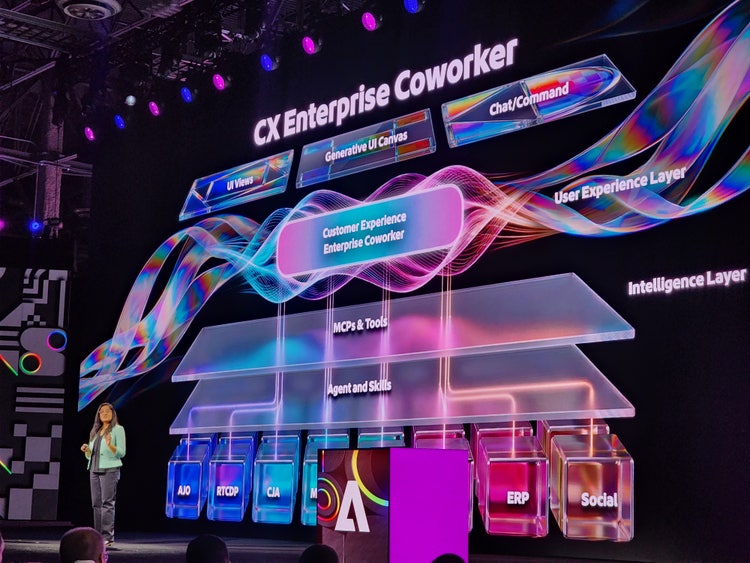
Among these is a new CX Enterprise Coworker, which is a tool sort of like if Clippy and Ultron decided to join forces to solve marketing problems. In a conversational interface, Adobe CX Enterprise Coworker can pull signals from all manner of areas and orchestrate AJO, Real-time CDP, CJA, AEM, etc. You can call it from their own UI, or orchestrate it from the AI platform of your choice (ChatGPT, Gemini, Claude, etc).
Adobe even envisions companies just tailoring & creating their OWN user interfaces based on their needs, rapidly pulled together using the fully-exposed MCPs and skills that Adobe is surfacing.
Key Moments in the Adobe Summit Recap
- 0:00 - Introduction
- 0:45 - Event Format Changes
- 1:30 - Pre-Summit Bike Ride in Red Rock Canyon (e-bikes for all! Except Tad)
- 6:00 - Summit Themes & Agentic AI Evolution
- 9:00 - Adobe Experience Manager Modernization Agent Lab (aemcoder aka “Emma”)
- 13:00 - Keynote Highlights with Nvidia CEO Jensen Huang & Adobe CEO Shantanu Narayen
- 18:00 - Composability & CX Enterprise Coworker
- 22:00 - Summit Sneaks & Live Demos (Audience of One, etc.)
- 28:00 - Authoring UI & Vibe Coding Lab with Chris & Markus
- 33:00 - Conversational Interfaces & Model Context Protocol servers (MCPs)
- 38:00 - Cedric & Haresh’s Session on AI Agents & Adobe Experience Manager
- 42:00 - Recommended Direction: EDS & DA for New Projects
- 46:00 - Canary Deployments in Cloud Manager for AEMaaCS
- 50:00 - LLM Optimizer ("Elmo!") & SEO Challenges
- 55:00 - Adobe Champions Community, Networking & Overall Takeaways
Podcast Speakers
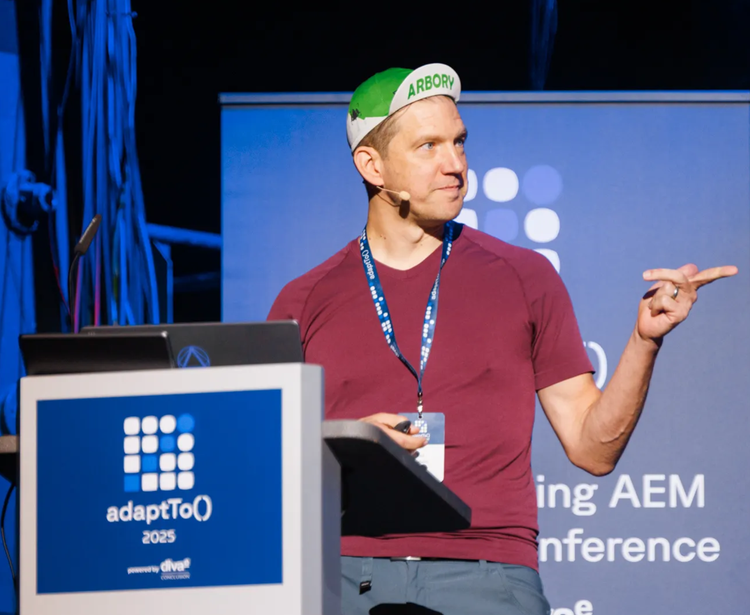
Tad Reeves
Principal Architect
Tad is a two-time AEM Champion, and has been working with Adobe Experience Manager & CQ since 2010. Starting in 1996, he has worn nearly every hat in website delivery from solution architecture to product management, as well as years in Dev/Ops and system administration. When Tad isn’t working (and sometimes when he is), he enjoys mountain biking and exploring nature with his wife & 3 kids.

Bryce Acer
CEO at Arbory Digital
With sixteen years in the tech field, specializing in Adobe software, Bryce’s career began in web content for pharmaceuticals and finance. After consulting for companies like Crown Partners and DCQ (Day Software), he founded Arbory Digital. He is passionate about helping companies succeed through honest, efficient tech solutions. At Arbory Digital, he believes in integrity and realistic advice for successful outcomes. In his free time, Bryce enjoys golf, softball, volleyball, beach activities, live music, and traveling.

Hank Thobe
CMO at Arbory Digital
Technical Project Manager and Business Director leading and supporting AEM experts to provide high-quality services and solutions for various industries and sectors.
Like what you heard? Have questions about what’s right for you? We’d love to talk! Contact Us

